
What Do Golf Caddies Do? Inside the Mind of a Tour Caddie
The short answer
A golf caddie carries the player's bag, but on Tour that is the smallest part of the job. A Tour caddie prepares the course before the round, works out the real yardage for every shot, helps choose the club and the target, decides where the safe miss is, reads greens, knows the rules and keeps the player calm and committed. Most of what they do never shows on the scorecard, but it shapes it.
Make these decisions with a Tour caddie, on every shot: the target, the club and where you can afford to miss.
Free for 7 days on the App Store · iPhone and Apple Watch
That knowledge is what GoCaddie is built on. Our caddies have worked at the highest level of the game, and with GoCaddie a Tour caddie gives you the play on every shot, by voice. Here is what that job looks like from the inside.
The visible job
Most fans see caddies carrying the bag, cleaning clubs and now and then talking quietly with their player. Those duties are real:
- Carrying and looking after the player's equipment for the whole round.
- Giving yardages to the green, the hazards and specific targets.
- Cleaning clubs and balls between shots.
- Tending or removing the flagstick on the green.
- Helping the player stay within the Rules of Golf.
But these tasks are only a small part of what a good caddie brings. The real value is in the conversations, the numbers and the judgment that happen before and between shots.
Preparing the course before the round
Before a tournament, Tour caddies walk the course, often more than once.
They check distances from landmarks like sprinkler heads and the edges of hazards, note the slopes on and around the greens, and mark where the landing areas and penalty areas are. The yardage book they carry is full of their own notes.
From that, they build a plan for the round with their player: which holes to attack, which holes to simply get through, which tee shots need less than driver and where to leave the ball on each par 5.
With the thinking done in advance, decisions on the course are quicker and clearer, which matters most under pressure.
Working out the real yardage
A Tour caddie does not just read a number off a sprinkler head and pass it on.
They combine the measured distance with everything else that changes how far the ball will fly: the wind at different heights, the slope up or down to the green, the lie, how firm the ground is, the temperature, and how far their player is hitting it that day.
The result is a precise picture of the shot: how far to the front, to the pin and to the back, and what it will play like today. That precision lets the player choose a club without second guessing it.
In practice it sounds something like this: 148 to the front, 156 to the pin, 165 to the back, slightly uphill and into the breeze, so it plays more like 165.
The player hears one clear number to swing at, and every other detail has already been taken care of.
Choosing the club
A caddie who knows their player knows more than how far each club goes. They know where the misses go.
Some players tend to leave the ball out to the right; others pull it left. A good caddie builds that into the target, so that even a slightly off shot finishes somewhere manageable.
That knowledge also decides close choices between two clubs. A caddie will often suggest the longer club if it means a miss finishes in rough rather than water, even if a perfect strike ends up at the back of the green instead of the front.
Where to miss, not just where to aim
One of the most underrated things a caddie does is define the safe miss before the player commits.
With the pin tucked front left behind a bunker, a good caddie does not just say aim at the flag. They point out where a miss is fine and where it is a disaster.
That changes the player's question from can I pull this shot off to what is the best shot I can fully commit to.
A caddie might put it like this: short is dead, left is dead, right leaves you a simple chip, so take one more club and swing freely. The player now has a clear target and a clear acceptable miss, and the fear goes out of the shot.
On par 5s, the same thinking decides whether to go for the green in two or lay up to a favorite number.
Reading greens
On Tour, a caddie's read of a putt can be the difference on a key hole. Caddies study the slope, the speed and the grain, look at the break from more than one side of the hole, and give the player their read.
The player decides, but a second trusted opinion helps them commit to the line and the pace.
Keeping the player steady
When a player makes a double bogey, a good caddie does not mirror the frustration. They stay calm, steady the player and move the focus to the next shot. That is how one bad hole is stopped from becoming three.
Over a round, caddies also manage the pace and the mood: when to talk and when to stay quiet, when to lighten things up and when to sharpen focus.
This part of the job is invisible on television, but it is often what holds a round together.
Knowing the rules
Tour caddies have to know the Rules of Golf well. When a ball finishes in a penalty area or needs a drop, the caddie helps the player find the right relief options and take them correctly.
A mistake can cost a penalty, or worse, so good caddies watch closely and speak up before a problem happens, not after.
Why it matters
Put together, a Tour caddie removes doubt. The player arrives at every shot with a clear number, a clear club, a clear target and a clear idea of the acceptable miss.
All that is left is to swing. That clarity is why the best players in the world value a great caddie so highly.
Thinking like a caddie in your own game
You can borrow a lot of this without a caddie on the bag. Before each shot, run through the questions a caddie would ask:
- What is the real number today, after the wind and the slope, and to which part of the green?
- Which club covers that number with my normal swing, not my best one?
- Where is the safe miss, and where is the miss I cannot afford?
- Is this a hole to attack, or a hole to get through with a par or an easy bogey?
- Am I fully committed, or am I still deciding?
Asking them every time is the hard part, especially when a round starts to slip away. That is where a voice beside you helps most.
Bringing a Tour caddie to your round
Every golfer faces the same decisions as a Tour player on every shot: which club, which target, go for it or play safe.
Most simply do not have an experienced voice beside them when it matters. GoCaddie was built to change that, with Tour caddies including Steve Williams, who was on Tiger Woods' bag from 1999 to 2011.
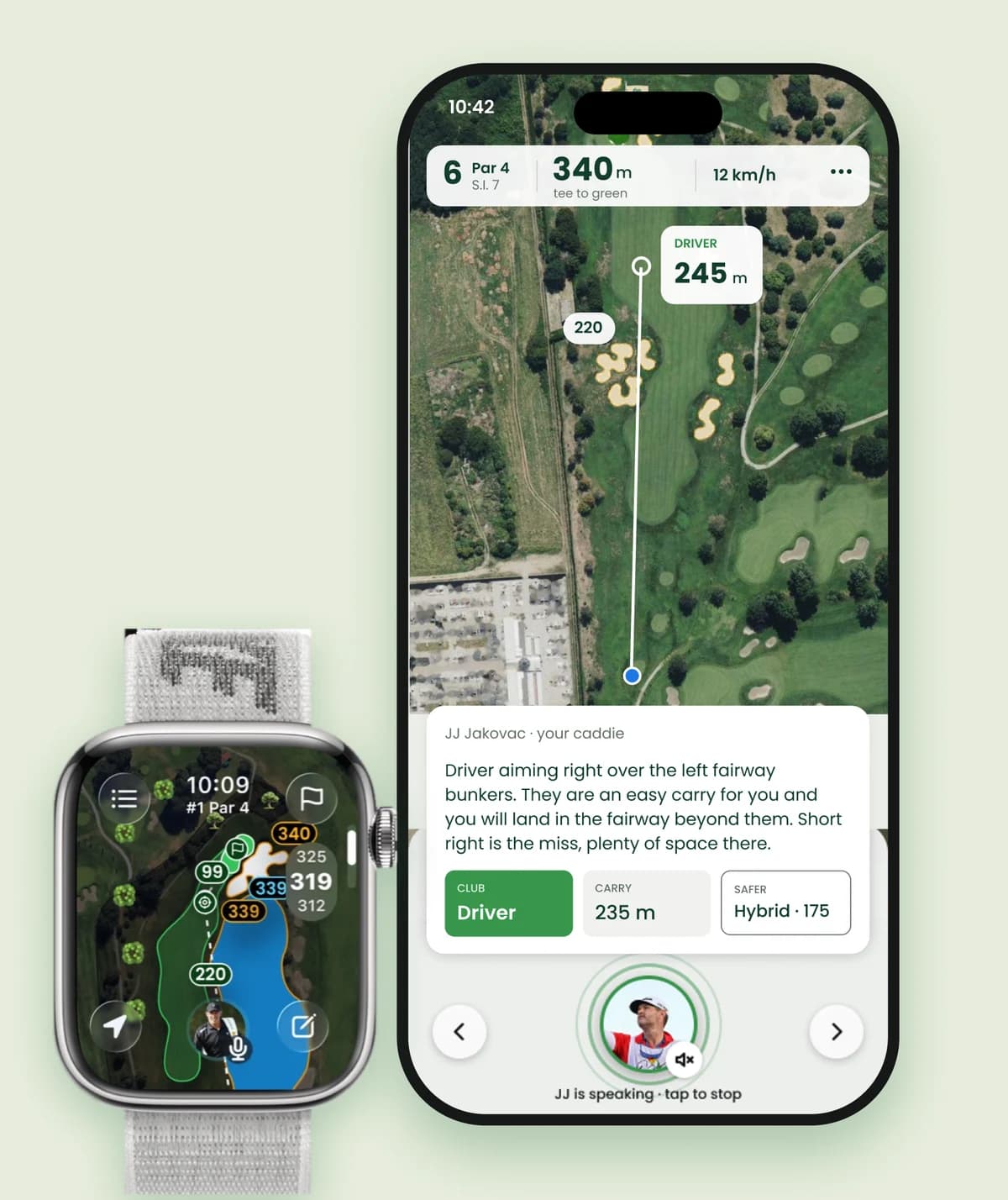
Your caddie reads the situation: the distance, what's in play, the conditions, your clubs and your game. Then you get the play: the club, where to aim with a target you can see, and where you can afford to miss.
Have a different shot in mind? Say so, and talk it through. Not sure of a ruling? Ask, and the answer comes from the official Rules of Golf. Just talk, or double tap for instant advice, on iPhone or Apple Watch.
Questions golfers ask
Can amateur golfers hire a caddie?
Yes. Many private clubs and resort courses offer caddies for a fee plus a tip. A good club caddie knows the course well and can help with yardages, lines and reading greens. Where no caddie is available, GoCaddie gives you the play from a Tour caddie on any course.
Do caddies help with putting?
Yes. Reading greens is one of the most valued parts of the job on Tour. Caddies study the slope, the speed and the break, often from more than one side of the hole, and give the player their read. The player always has the final say.
What does it take to become a Tour caddie?
There is no formal qualification. Most Tour caddies come up through club caddying, amateur events and contacts in the professional game. What they need is a deep knowledge of the game and the rules, a head for numbers, composure under pressure and the trust of their player.


The right play, on every shot.
Twelve Tour caddies. Pick one, and get the play in your ear before every shot.
Try your Tour caddie free on the App StoreOn the App Store · 7 days free · Cancel anytime