
Golf Risk Management: When to Attack and When to Play Safe
The short answer
Attack when the target is generous, the shot is one you pull off most of the time, and your likely miss still leaves an easy next shot. Play safe when a miss brings water, out of bounds or a buried lie into play, or when the shot only comes off on your best swing. That is golf risk management in two sentences: choose the option with the best likely score, not the most exciting best case.
Make these decisions with a Tour caddie, on every shot: the target, the club and where you can afford to miss.
Free for 7 days on the App Store · iPhone and Apple Watch
The golfers who score best over time are neither the boldest nor the most cautious. They are the ones who weigh each shot honestly.
Tour caddies do this on every shot of every round, and GoCaddie puts one in your ear to give you the play when it matters. This guide shows you how they think about it.
The core idea: think about the likely score
For every decision, picture what usually happens with each option, not just what happens when it goes perfectly. The option that gives you the lowest score on average is the right play, however aggressive or conservative it looks.
Most golfers remember their great escapes and forget the times the same shot finished in the water. That makes risky shots feel more likely to work than they really are. Thinking in likely scores corrects for it.
A worked example
You have 150 yards into a par 4. The pin is tucked on the left, a few paces from a pond. The right half of the green is wide open. The numbers below are only an illustration; use your own.
- Attack the flag. Imagine you play this shot ten times. Twice you hit it close and make birdie, four times you find the green and make par, and four times you find the water and make double bogey. That adds up to 6 over par for the ten holes.
- Aim at the middle of the green. Once you hole a long putt for birdie, eight times you two putt for par, and once you miss the green and make bogey. That is level par for the ten holes.
The safe target costs you a birdie or so over ten tries and saves you around six strokes. The flag looks tempting. The middle of the green is the play.
The five things to weigh before every shot
1. How often you really pull it off
Be brutally honest. Your success rate with a high flop shot over a bunker might be one in five. Your rate with a low running chip to the same pin might be two in three.
The shot you hit well two times out of three is usually the better choice, even if it looks less impressive.
Memory is unreliable here, because the shot you pulled off once stays with you while the failures fade.
If you want honest numbers, keep a simple note of the tricky shots you try and how they turn out. A few rounds of that will change how you choose.
2. What a miss costs
Not all misses are equal. A chip that finishes six feet away costs you at most one stroke. A shot that finishes back in the bunker, in a penalty area or behind a tree can cost two or three.
Before choosing the aggressive option, find the worst likely miss and estimate what it costs. The more expensive the miss, the more often you need to pull the shot off to justify it.
A shot you hit half the time can be fine when the miss is light rough, and a poor choice when the miss is water.
3. What success is really worth
Ask how much the aggressive shot actually gains you when it works. Very often the answer is one stroke: a birdie instead of a par. If the same shot fails often and turns par into bogey or worse, the gain does not cover the loss.
The bigger the reward and the cheaper the miss, the more risk makes sense. Going for a par 5 in two when the miss is a simple chip can be worth it.
Going for it when the miss is a penalty usually is not, even though eagle is on the table.
4. The situation
How much risk to take depends on what the round needs. In a normal medal round or early in a competition, every stroke counts the same, so the play with the best average score is right.
When you need a birdie to win a match hole or to catch up late in an event, a higher risk shot becomes more reasonable, because a par is no better than a bogey for what you need.
Tour caddies follow the leaderboard closely for exactly this reason. The same shot can be the wrong play on Thursday and the right one on Sunday afternoon.
5. How you are playing and feeling
Your chance of pulling off a shot is not fixed. It changes with how you are striking it and how you feel. Tired, tense or frustrated, it drops. Swinging freely after a run of good shots, it rises.
After a bad hole, play the next one more carefully, not less. The urge to win a shot back is one of the most expensive habits in golf.
Get a solid par on the card first, and let your confidence come back before you take on anything ambitious.
Green lights: when to attack
- The pin is accessible, with little trouble between you and it.
- You hit this shot well most of the time.
- Your likely miss is rough or the fringe, not a penalty area or a deep bunker.
- A birdie is worth much more than a par to you right now.
- You are striking it well and feel comfortable over the ball.
When most of these are true, commit fully and go at it. A good example: 150 yards to an open pin, no water, bunkers only on the side away from your usual miss, and a club you hit solidly. Attack.
Red lights: when to play safe
- The trouble on the aggressive line is severe: water, out of bounds or a bunker you may not get out of.
- You pull this shot off less than half the time.
- Success gains you one stroke but failure could cost you two or more.
- You are tired, rattled or just off a bad hole.
When any of these apply, take the shot you can rely on. Protecting your score from a big number is worth more than the occasional birdie.
How Tour caddies talk about risk
Caddies rarely put it as safe versus aggressive. They describe the whole picture, the reward and the danger, and end with a clear play.
A caddie might say: the pin is gettable, but left is dead and it is a hard shot even when you catch it well, so take the 8 iron, aim right of the flag and make the comfortable par.
Notice what that does. The player hears why, knows where the safe miss is, and gets one clear decision to commit to.
The conversation usually runs the same way: the caddie gathers the facts, talks through the options, listens to what the player wants to do, and then backs the chosen shot fully. Agreeing on the plan before the swing is what removes doubt over the ball.
Pressure and decisions
Pressure makes decisions worse. When the stakes rise, golfers stop thinking and start reacting, either forcing a shot or steering it nervously.
Tour caddies counter this with a calm voice and by breaking a big moment into simple pieces: the number, the club, the target, the miss.
You can do something similar for yourself. Plan the risky holes before the round, decide in advance where you will attack and where you will play safe, and stick to the plan unless the conditions really change.
Decisions made calmly on the first tee are better than decisions made angrily on the twelfth.
Get the play from a Tour caddie
Weighing all of this honestly on every shot is hard, especially when your pride wants the flag. That is exactly where a caddie earns their place.
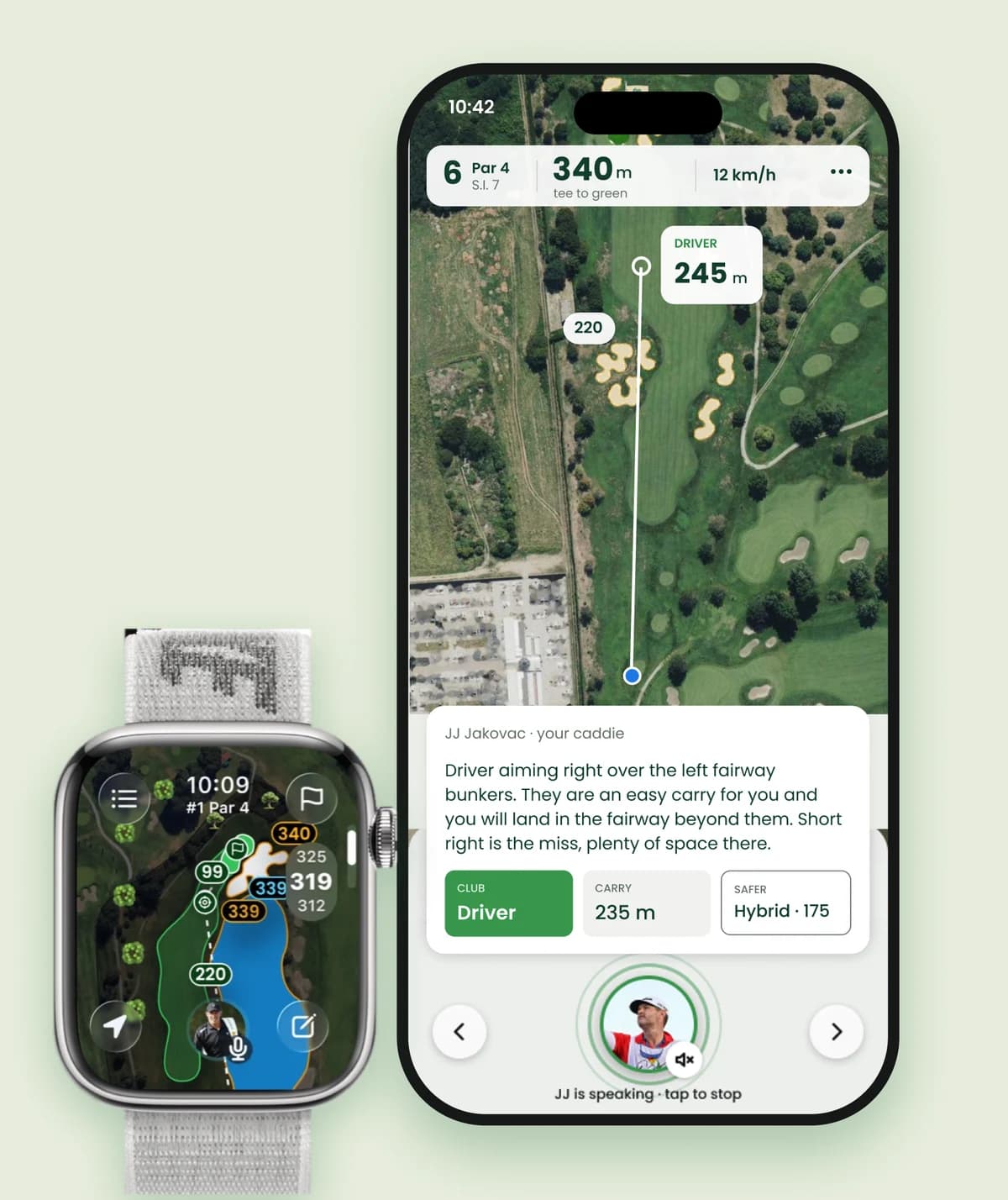
With GoCaddie, your caddie reads the situation: the distance, what's in play, the conditions, your clubs and your game. Then you get the play for that moment, sometimes safe and sometimes bold: the club, where to aim with a target you can see, and where you can afford to miss.
Want to take the flag on anyway? Say so, and your caddie talks it through with you, then you commit.
Questions golfers ask
Is playing smart the same as playing defensive golf?
No. Smart golf means choosing the shot with the best likely score, which is sometimes aggressive and sometimes cautious. Defensive golf means always taking the lowest risk option whatever the reward, which throws away good birdie chances.
How do I know my success rate for a shot?
Be honest about your recent history with that shot. If you got up and down from a similar bunker 6 times in your last 10 tries, your rate is about 60%. If you cannot remember the last time a flop shot came off under pressure, assume it is low.
Do beginners need to think about risk?
Yes, arguably more than anyone. A beginner who plays away from trouble, aims at the middle of greens and avoids shots that bring penalties into play will score far better than one who plays hopefully.
When should I choose consistency over the spectacular shot?
Whenever the consistent shot gives you the better likely score, which for most amateurs is most of the time. A dependable shot that leaves an easy chip beats a spectacular one that sometimes ends in a bunker or the water.


The right play, on every shot.
Twelve Tour caddies. Pick one, and get the play in your ear before every shot.
Try your Tour caddie free on the App StoreOn the App Store · 7 days free · Cancel anytime